

How combat work is recorded
A combat flight is performed in a pair - the standard combat unit in aviation. Official documents usually record that "the pair detected the target", "the pair illuminated it" or "the pair escorted it". At the same time, the final wording "destroyed" is often recorded only for the crew of the helicopters or aircraft that actually hit the target. Because of this, participants who provide detection and illumination of the target may not be included in the list of those receiving rewards.
The reward for a destroyed Shahed
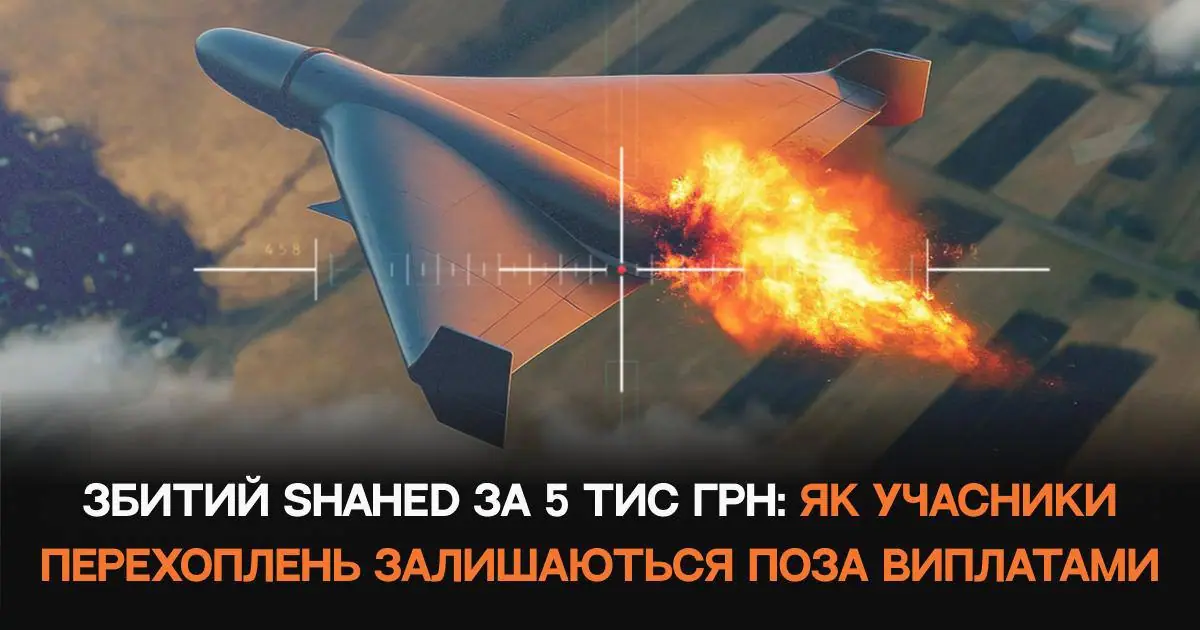
Public explanations of payments for destroyed equipment mention an amount of UAH 36,540 for "other aircraft", a category that includes drones. For example, a typical shoot-down operation may involve seven people: four crew members of an Mi-8 and three State Border Guard Service pilots who carry out detection, illumination and escort.
If this amount is divided among all participants in the operation, it comes to about UAH 5,220 per person. However, because of the wording in the documents, often only the crew recorded as having "destroyed" the target ends up on the list of recipients.
Lawsuits, losses of millions and a demand for fairness
According to insider information, one pilot may have had about 250 confirmed air targets over roughly three years of service. Even at the minimum share of UAH 5,220 for each, that is UAH 1,305,000 - the amount a person could have received for real participation in interceptions. But because of the way records are kept, this money can simply "disappear" from the payments. Even attempts to defend it in court do not always succeed: in particular, in case No. 440/13673/25 at the Poltava District Administrative Court the plaintiff lost, after which an appeal was filed (No. 1918/26 of 12.01.2026).
RESISTANCE states that the system of recording combat results needs to change. We demand that documents record all participants in an operation who ensured the destruction of an air target: the crews that detected the drone, illuminated it and escorted it until it was hit. The reward should be shared among all confirmed participants in the combat work. Without detection, illumination and escort, there would often be no hit at all. The solution could be a clear procedure for recording joint operations, with all crews listed in reports and the reward automatically distributed among participants. This is not only a question of money, but also of fairness to those who work to protect Ukrainian cities during every air raid alert.