

Salaries
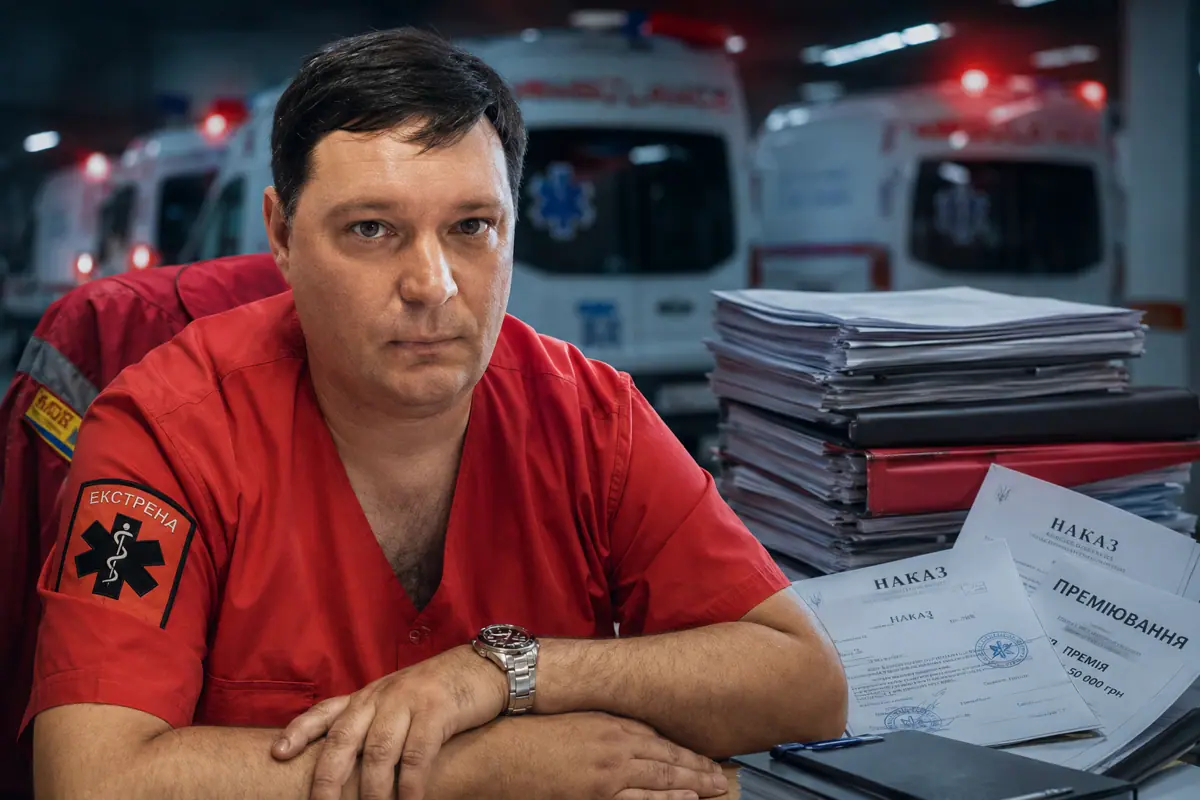
Salaries were discussed separately. According to Dmytro Lavrenko, a letter was sent through the Health Department to the National Health Service of Ukraine about a possible clarification of the funding calculations. The point is that an increased coefficient for rural areas is applied to the Emergency Medical Care Centre under Cabinet of Ministers resolution No. 1808 of 31.12.2025. However, there is a question of whether all actual circumstances are taken into account correctly.
In particular, situations where people are registered in a city but actually live in villages, or where internally displaced persons actually live in the service area but may not be properly counted. As we understood from the meeting, if this data can be clarified and confirmed, it could potentially affect the amount of funding.
We hope the Centre's administration will not just wait for a reply, but will continue, where possible, to systematically approach senior management, the Health Department, the National Health Service and other competent bodies about raising the salaries of emergency medical workers. It is a question of whether people will stay in the system.
Bonuses
Svitlana Myrna repeatedly raised the issue of bonuses during the meeting. This concerns large bonuses which, according to our information, were received by certain members of the Centre's administration: Dmytro Lavrenko himself, the deputy director, the chief accountant and other officials. The amounts are roughly 40-50 thousand hryvnias a month.
And this at a time when paramedics, doctors, drivers and other emergency medical workers did not receive such monthly bonuses. Asked why deputy director Nikitina received significant bonuses in 2020-2022, Dmytro Lavrenko explained that she "worked very well".
This raised a logical question: so paramedics, doctors, drivers and dispatchers do not work well enough?
Don't the people who go out on calls every day, save lives, work under stress, risk their own safety and carry the emergency care system on their shoulders deserve fair bonuses? It was proposed to review the very approach to bonuses. Bonuses should not be concentrated only around the administration. They should be distributed more fairly among the workers who actually keep emergency medical care running. For example, Svitlana suggested that if one official, Nikitina (deputy director), receives a 50 thousand hryvnia bonus, this money could be split among five paramedics at 10 thousand hryvnias each. It is a question of respect for workers and fairness within the system.
No specific promises to change the approach to bonuses were made during the meeting.
So we will submit official requests about bonuses, the criteria for awarding them, the size of bonuses for the administration and for workers, and will monitor this situation publicly.
The motor depot, ambulances and fines for drivers
The situation with the motor transport enterprise was discussed separately. As far as we know, the vehicles and drivers are in fact tied to the motor depot, and the Emergency Medical Care Centre rents this resource under a contract. And here a logical question arises: why? Why can't the ambulances be directly on the balance sheet of the Emergency Medical Care Centre?
Why do drivers end up in a situation where, according to them, not all have deferments, and speeding fines during crew call-outs can affect their bonuses? Paramedic Oleksandr Tykhoretskyi directly asked the head about the fines that come for speeding while a crew is at work. Dmytro Lavrenko replied that he did not know about this situation and said he would talk separately with the head of the motor depot and look into the issue.
But here another logical question arises: did the head of the Emergency Medical Care Centre really not know about a problem the drivers themselves talk about? Because it looks strange, to put it mildly: an ambulance must go to a call, but the driver thinks not only about the patient, but also about whether he will get a fine and lose part of his bonus. That is why in Poltava you can see an ambulance with flashing lights driving at 50 km/h. Not because drivers do not understand the importance of the call. But because the system creates risks for them. Dmytro Lavrenko explained that the decision on the motor depot was made by the Poltava Regional Council, and he personally has no influence over it.
So this week we will already be submitting official requests about this enterprise, the contracts, funding, the grounds for the lease and why ambulance transport has still not been arranged in a clear and safe way.
Crew composition and worker safety
The head of the independent trade union Oksana Svynarenko separately raised the issue of worker safety in Poltava, Kremenchuk and Myrhorod and across the region.
This is not an abstract issue. Workers from different cities in the region even came to the protest to personally raise the problems they face at work. During the meeting we told Dmytro Lavrenko that, according to our information, in Myrhorod women may go out on calls alone. And calls vary. They may involve aggressive drunk people, conflict situations, dog attacks and other risks an emergency medical worker may face alone. Dmytro Lavrenko said he thought workers worked in pairs.
During the meeting he called the station, and it turned out that three crews work in pairs and one crew works alone. At the same time, according to information we received in previous months, there were situations when workers worked alone. So the question remains open.
We hope Dmytro Lavrenko has heard this problem and will take measures to even out the situation at all stations in the region. Because the safety of emergency medical workers is not a secondary issue. A person who goes to save others should not be left unprotected.
The number of dispatchers on the line
The dispatch service was discussed separately. According to the information given, about 4-5 dispatchers work on the line in Poltava. Dmytro Lavrenko says there are no missed calls. At the same time, we report that the dispatch service has vacancies. So there is a staffing problem there too.
Working conditions and communication with the trade union
Working conditions and communication between the administration of the Emergency Medical Care Centre and the independent trade union were discussed separately. It was said that previously there was effectively no proper systematic communication with the trade union. Because of this, the head of the independent trade union Oksana Svynarenko was not always able to promptly raise important issues that concern union members and the Centre's workers. Svitlana Myrna proposed a simple and clear mechanism: the Centre's workers turn to Oksana Svynarenko with questions, complaints or proposals, and the union head then systematically agrees these issues with management. Dmytro Lavrenko agreed with this approach. He also said his door is open to workers and to discussing problem issues.
We hope this will not remain just words after the meeting, but will become real practice: where workers can talk about problems without fear, the trade union has access to dialogue, and the administration does not ignore issues that directly concern working conditions.
Communication of certain officials with staff
The issue of communication between certain officials of the Centre and staff was also raised. In particular, workers' complaints about the communication of senior doctor Tomenko, deputy director Nikitina and Kinash were discussed. According to staff, they have repeatedly faced raised voices, rudeness, improper communication and swearing from Tomenko, which workers consider unacceptable in a working environment. The issue of breaches of subordination and normal professional communication was also raised.
Dmytro Lavrenko was informed about these complaints during the meeting. He said he had not known about such situations before, but promised to talk about it separately and look into the circumstances. And here too a question arises: if almost all staff talk about the same problem, why does management learn about it only after a public outcry and a meeting with representatives of the public?
What next?
We do not consider this meeting the final result. It is only the beginning of a normal, direct and public conversation about what is happening in the emergency medical care system of Poltava region. We have heard management's position. Now we will check the documents.
Next - official requests, replies, analysis of contracts, the issue of bonuses, the motor depot, worker safety, communication with the trade union and public oversight. Because emergency medical care is not just an institution. It is people who save lives every day. And they must work in conditions where the system does not break them.